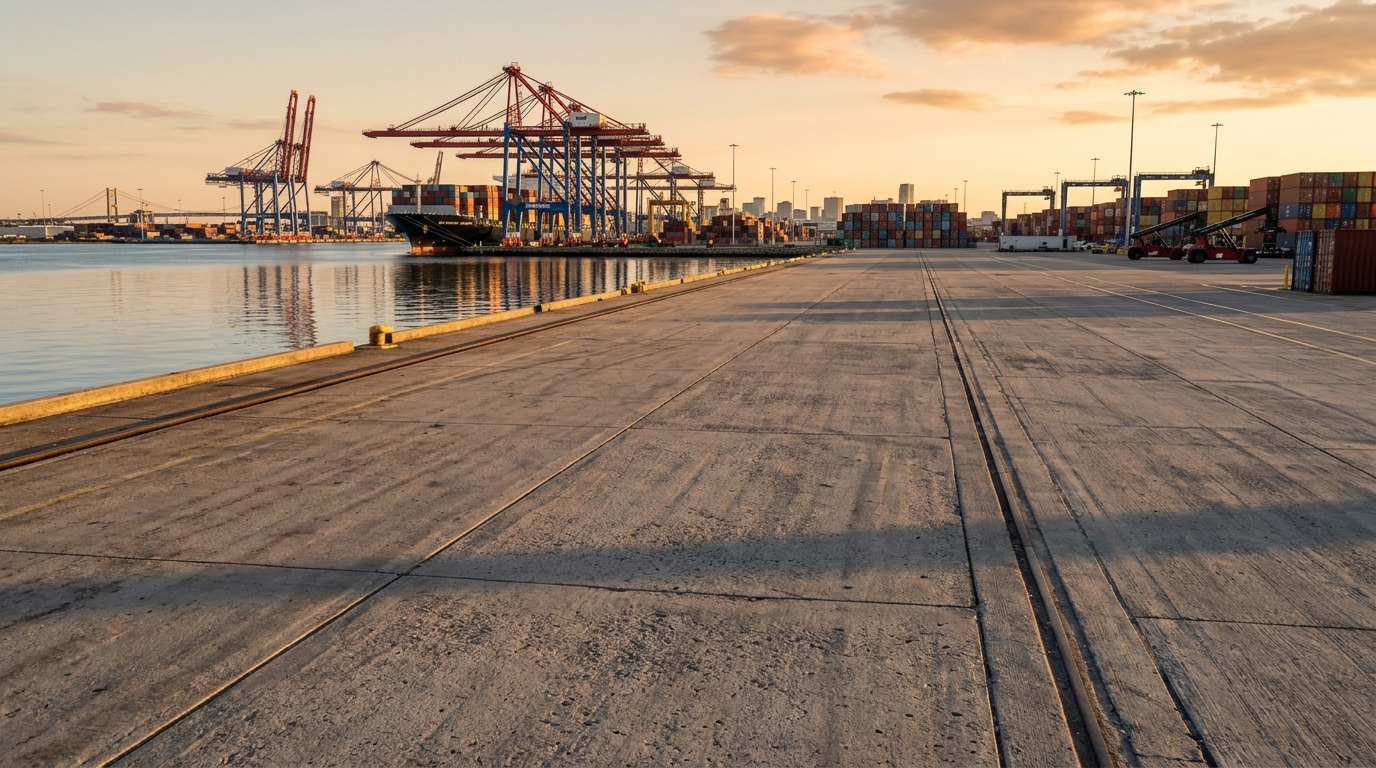
Baltimore Commercial Concrete Contractors & Marine Terminal Pours
Specialized port terminal paving, heavy industrial equipment pads, and deep structural commercial foundations.
Specialty: Port Terminal Aprons, Industrial Pads & Historic Commercial Underpinning
Request a Commercial Bid Review
Commercial Concrete Contractors in Baltimore: Quick Answer
Commercial concrete contractors in Baltimore, Maryland build the slabs, foundations and structural pours behind port terminal aprons, industrial pads & historic commercial underpinning. Success depends on ground conditions (chesapeake bay waterfront water tables, coastal salinity, and corrosive soil conditions), a mix and reinforcement package matched to the load, and floor-flatness control that meets the owner's equipment. Typical specifications in this market are listed below and are confirmed project by project with the engineer of record.
Baltimore Commercial Concrete Services
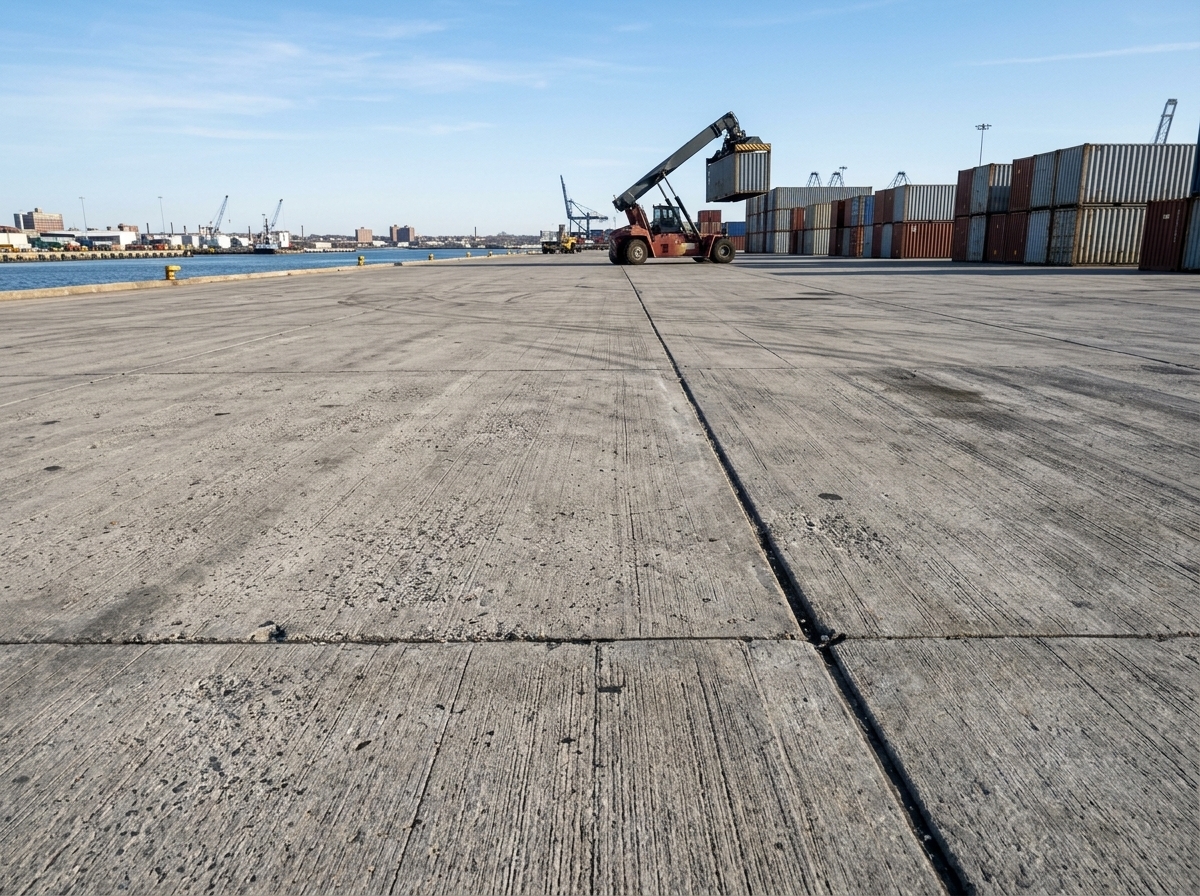
Port & Intermodal Terminal Paving
Sulfate-resistant heavy concrete paving built for reach stackers and cargo container weights.
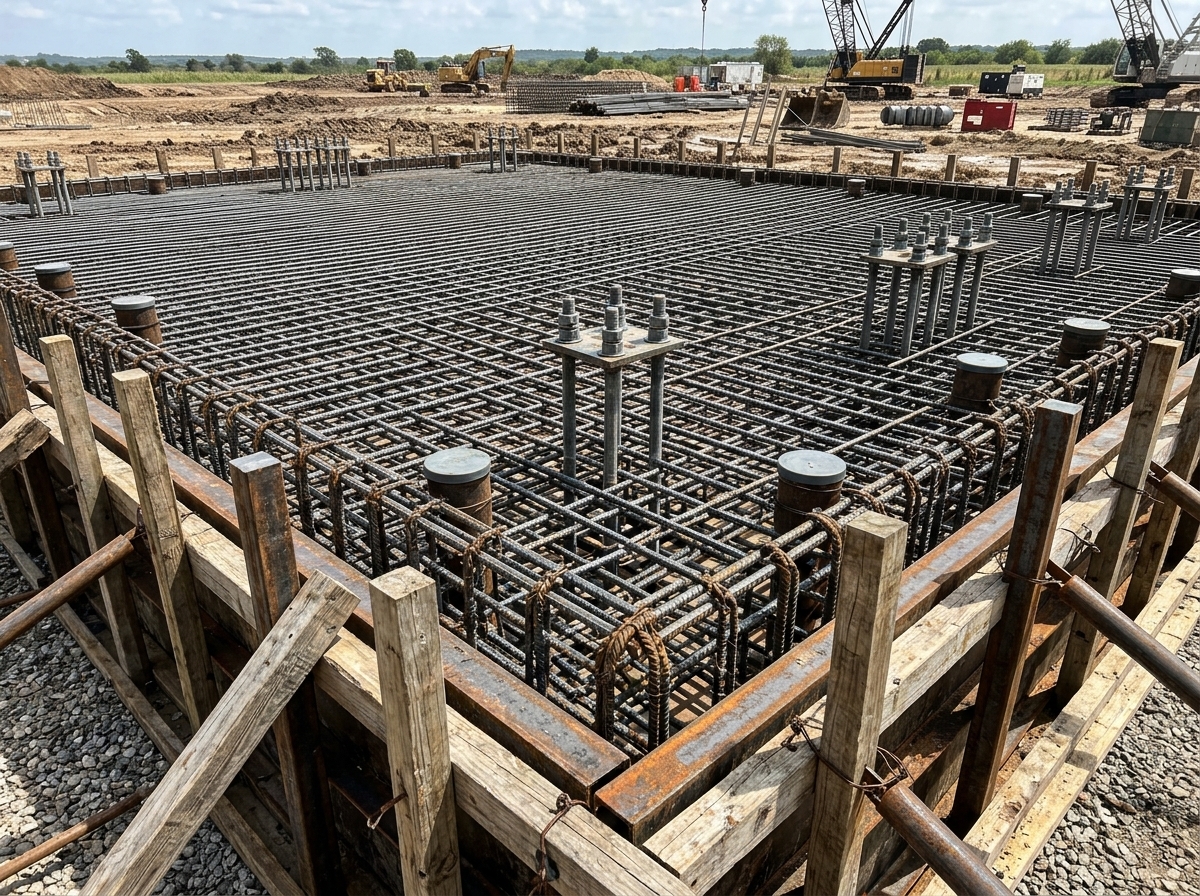
Heavy Industrial Manufacturing Pads
Mass-poured foundation footings, compressor pads, and vibration-damped containment dikes.
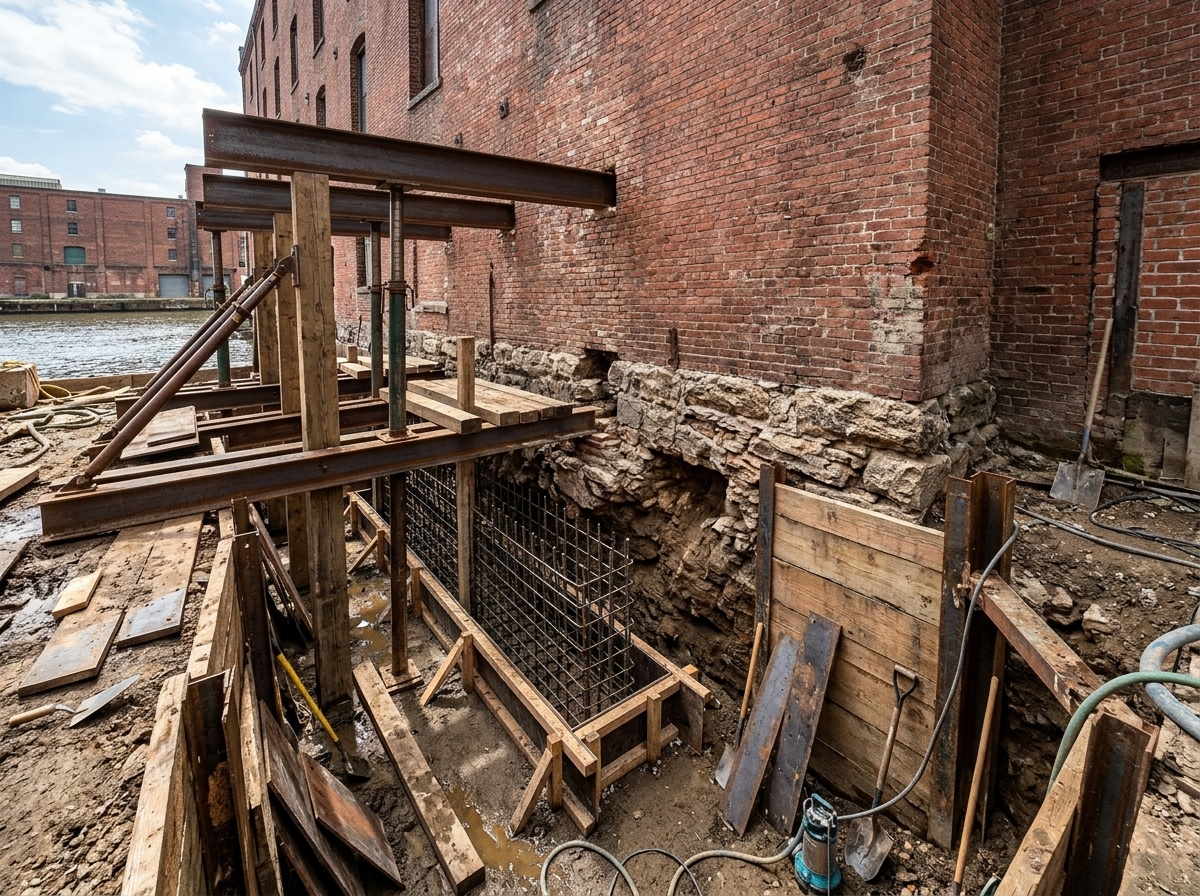
Commercial Structural Underpinning
Historic warehouse underpinning and micropile installations in downtown and waterfront districts.
Diamond Saw Cutting & Slab Trenching
High-horsepower slab cutting for heavy industrial plumbing and underground conduits.
Baltimore Concrete Specifications at a Glance
Reference specifications for Baltimore commercial work. Final mix designs, tolerances and reinforcement are set by the project engineer and specifications.
- Concrete mix standard
- 5,000–7,000 PSI sulfate-resistant, silica-fume enhanced commercial mix
- Floor flatness (FF / FL)
- FF 45 / FL 35 high-load flatwork
- Reinforcement
- Hot-dipped galvanized or epoxy-coated ASTM rebar
- Ground conditions we design around
- Chesapeake Bay waterfront water tables, coastal salinity, and corrosive soil conditions
Commercial Concrete Scopes We Build in Baltimore
Illustrative renderings of the scope types, not photographs of completed projects.
Industrial Corridors We Serve
The Commercial Concrete Guide for Baltimore Port, Industrial and Historic-Building Owners, GCs and Developers
Baltimore is a harbor city first and a concrete market second, and that order explains almost everything about how commercial slabs, pads and foundations get built here. The Port of Baltimore sits on the tidal Patapsco River roughly 150 miles closer to Midwest consumers than most other East Coast deepwater ports, and the Maryland Port Administration's public terminals, the private marine terminals around them and the rail and truck yards that feed them all depend on pavement that can survive heavy wheel loads, wet subgrades and salt-laden air at the same time. A few miles away, a century of steel, shipbuilding, canning and warehouse history has left behind brick-and-timber buildings, filled shorelines and brownfield parcels that now need modern foundations.
The market splits into recognizable tracks. Marine and intermodal work, such as container yards, ro-ro aprons and rail-served pads, is dominated by state agencies, terminal operators and their prime contractors. Large-format logistics and manufacturing, concentrated at Tradepoint Atlantic on the former Sparrows Point steel site, around the BWI airport district in Anne Arundel County and along the Holabird Avenue industrial belt in southeast Baltimore City, produces tilt-wall shells, truck courts and heavy equipment foundations. Urban infill and adaptive reuse in neighborhoods such as Locust Point and Canton adds underpinning, new elevator pits, saw-cut openings and trenching inside buildings that were never designed for what owners now want to put in them.
Each track has its own failure modes. Terminal pavement fails at joints, at container-stack corners and where fill consolidates. Industrial pads fail through poor subgrade preparation, shrinkage cracking and vibration that was never accounted for. Historic buildings suffer when underpinning is sequenced carelessly beside shallow brick footings. Because the Chesapeake environment adds chlorides, sulfates and a high water table to every one of those problems, the mix design, reinforcement protection and curing plan matter as much here as the formwork does.
That is why owners and general contractors often bring in a specialty concrete contractor rather than treating this scope as generic flatwork. We focus on the work that the Baltimore region actually produces: heavy-duty paving, mass-poured equipment foundations, structural underpinning and precision slab cutting. This guide explains how the local geology, permitting framework, climate and cost drivers shape that work, so you can write a better scope, ask sharper questions of your engineer and avoid the surprises that most often delay waterfront and brownfield projects in the Baltimore area.
Fall Line Geology, Filled Shorelines and Corrosive Groundwater
Baltimore straddles the Atlantic Seaboard Fall Line, where the hard crystalline rocks of the Piedmont meet the soft, layered sediments of the Atlantic Coastal Plain. North and west of the harbor, foundations often bear on stiff residual clay, weathered saprolite or rock. South and east of downtown, toward Dundalk, Sparrows Point, Holabird and the BWI area, the ground is a wedge of sand, gravel, silt and clay that thickens toward the Bay. The practical result is that two sites a few miles apart can need entirely different foundation strategies, and a geotechnical report from one neighborhood says very little about the next.
Waterfront parcels add a second layer of complexity: fill. Large parts of the harbor edge, including areas around marine terminals and former industrial yards, were built up over decades with dredge spoil, slag, demolition debris and miscellaneous fill. Such material can be loose, variable and occasionally contaminated, and it often sits above soft estuarine clays that consolidate slowly under new loads. Groundwater is typically shallow and tidally influenced, so excavations frequently need dewatering, and any slab on grade should be designed on the assumption that moisture will be present beneath it. Heavy container-handling pavements usually need an engineered cement-treated or crushed-stone base, thick slabs and carefully planned joints because settlement under a stack of loaded containers shows up quickly as faulted joints and cracked panels.
The groundwater itself is part of the design problem. Brackish water carries chlorides that attack reinforcing steel, and sulfates in soil or water can attack the cement paste. ACI 318 handles this through exposure classes: chloride exposure (Class C) and sulfate exposure (Class S) set limits on water-to-cementitious ratio, minimum strength and cement type, and the most restrictive class governs. In practice that points toward low water-cementitious ratios, sulfate-resisting or blended cements, supplementary cementitious materials such as slag, fly ash or silica fume, and protected reinforcement such as hot-dip galvanized (ASTM A767) or epoxy-coated (ASTM A775) bar where exposure warrants. Your geotechnical and structural engineers set the actual requirements; our job is to build to them, and to flag early when site conditions suggest they should be revisited.
Permitting, Inspections and Licensing for Baltimore-Area Concrete Work
Permitting authority: Baltimore City Department of Housing and Community Development (DHCD), Permits and Code Enforcement
Inside Baltimore City, building permits are handled through DHCD's Permits and Code Enforcement function using the city's online e-permits portal, which accepts commercial applications, plan uploads, fee payments and inspection scheduling. Work that adds or alters structure, such as new foundations, structural slabs, underpinning and retaining elements, generally needs a permit and plan review, and Maryland has adopted the International Building Code family through its Building Performance Standards, with Chapter 17 special inspections for items like reinforced concrete, soils and deep foundations. Owners typically hire the independent testing agency, and the engineer of record issues the statement of special inspections. Confirm the currently adopted code edition and local amendments with DHCD before design is frozen.
Other agencies often sit on the critical path. Disturbing roughly 5,000 square feet of ground or moving 100 cubic yards of earth generally triggers erosion and sediment control and stormwater management review under Maryland Department of the Environment rules as administered locally, and grading permits are not usually released until those plans are approved. Projects in the Critical Area, near tidal wetlands or involving shoreline and wharf work can add MDE and U.S. Army Corps of Engineers authorizations. In a CHAP-designated historic district or on a landmark, exterior changes need Commission for Historical and Architectural Preservation approval before the building permit hold is lifted. Outside the city, the same work is permitted by Baltimore County for Sparrows Point and by Anne Arundel County around BWI; state-owned Port terminal projects follow the Maryland Port Administration's own procurement and review path.
On the contractor side, Maryland's home improvement license covers residential work, not commercial or industrial construction, so commercial concrete contractors should confirm their licensing and registration obligations with the Clerk of the Circuit Court and the relevant trade boards. Safety rules also shape methods: OSHA's respirable crystalline silica standard for construction (29 CFR 1926.1153) drives wet cutting, vacuum dust capture and written exposure control plans for saw cutting, coring and grinding. None of this is legal advice; verify current requirements with each agency before you bid or mobilize.
What Drives Cost and Schedule on Baltimore Commercial Concrete
Prices move with scope, market conditions and site specifics, so we do not publish fixed numbers. These are the factors that most often separate a smooth Baltimore project from one that grows in cost or duration.
- Subgrade improvement and dewatering
- Filled shorelines and shallow tidal groundwater frequently mean over-excavation, geotextile, stabilized base or dewatering before a single form is set. Whether a site needs these measures is often unknown until borings and test pits are complete, so early geotechnical work is one of the best schedule investments an owner can make.
- Durability-driven mix and reinforcement
- Chloride and sulfate exposure pushes designs toward low water-cementitious ratios, blended or sulfate-resisting cements, silica fume and coated rebar. These choices improve service life but affect batching logistics, finishing windows and material lead times, and they should be priced against the cost of premature repair on a working terminal.
- Working around live port and industrial operations
- Terminal yards and operating plants rarely close completely. Phased pours, night or weekend windows, gate and security procedures and coordination with vessel and rail schedules all add planning time, and the sequence of panels often matters more to the owner than the total quantity of concrete.
- Contaminated or regulated soils
- On brownfield parcels, excavated soil may need characterization, special handling or reuse limits under the site's environmental controls. Concrete scopes that disturb the ground, such as footings, utilities and trenching, should be coordinated with the owner's environmental consultant before the schedule is set.
- Historic review and tight urban access
- Downtown, Locust Point and Canton projects can involve CHAP or Maryland Historical Trust review, narrow streets, limited laydown and neighboring masonry that must be monitored during underpinning. Small-equipment methods and hand-dug pits are slower than open-site work but are often the only safe option.
- Concrete supply, testing and weather windows
- Large continuous pours depend on dependable batching capacity and truck cycle times through congested corridors and bridge or tunnel approaches. Hot, humid summer afternoons and winter freeze periods can force pours into early morning or call for protection measures, so schedule float for weather is prudent.
Pour Seasons & Climate in Baltimore
Baltimore has a humid subtropical climate with hot, muggy summers and cold winters that still see a meaningful number of freezing nights and freeze-thaw cycles. That combination favors spring and fall for most exterior flatwork and paving: temperatures are moderate, evaporation is manageable and the concrete can gain strength without either heat or frost interfering. Late spring through early fall is generally comfortable for large placements, while the shoulder months of late fall and early spring sometimes need overnight protection plans.
Summer pours demand attention to hot-weather practice in the spirit of ACI 305 and ACI 302: early-morning placements, retarders where appropriate, shaded or cooled materials, windbreaks and prompt curing so that high temperature, humidity swings and afternoon thunderstorms do not compromise surface finish. Winter work is possible with cold-weather measures in the spirit of ACI 306, such as heated enclosures, insulated blankets and accelerated mixes, but freeze-thaw exposure means exterior concrete should be air-entrained where specified and must be allowed to gain adequate strength before deicers or traffic. Tropical storm remnants and nor'easters also bring heavy rain and tidal surge to harbor sites from late summer through early spring, so waterfront schedules should treat storm season as a real constraint.
Commercial Concrete Project Timeline in Baltimore
1. Discovery, borings and scope definition (2-6 weeks, often in parallel with design)
Review available geotechnical data, commission borings on fill or waterfront sites, confirm loads, exposure classes and operating constraints, and identify permit triggers such as grading, Critical Area or historic review.
2. Design coordination and mix submittals (3-8 weeks)
Coordinate joint layouts, reinforcement coatings, dowel and anchor details and mix designs with the engineer of record. Trial batches for sulfate-resisting or silica-fume mixes and long-lead rebar coating often start here.
3. Permits and approvals (Varies widely; commonly several weeks to a few months)
Building, grading and sediment control permits, plus any MDE, Corps, CHAP, county or Port authority reviews. Duration depends heavily on completeness of submittals and agency workload, so confirm timelines with each agency.
4. Mobilization, earthwork and subgrade preparation (1-4 weeks)
Install erosion and sediment controls, excavate, dewater as needed, improve and proof-roll the subgrade, and place base courses. Testing and inspection of bearing conditions is typically completed before reinforcement is placed.
5. Forming, reinforcing and placement (Depends on quantity; often the longest phase)
Set forms, place coated reinforcement, pour in planned panels or mass-pour sequences, finish to the specified flatness, cure and saw joints on schedule. Weather and live-operation windows shape the sequence.
6. Curing, testing, joint sealing and turnover (1-3 weeks plus strength-gain time)
Complete curing, field and lab strength verification, joint sealing, punch-list repairs and as-built documentation. Heavy equipment loading should wait until the engineer confirms strength and any required cure period.
Baltimore Commercial Concrete FAQ
Do I need a permit for commercial concrete work in Baltimore?
Usually yes for structural work. In Baltimore City, new foundations, structural slabs, underpinning and retaining elements generally need a building permit through the Department of Housing and Community Development's e-permits portal, and ground disturbance above roughly 5,000 square feet or 100 cubic yards typically triggers erosion, sediment and stormwater review. Baltimore County and Anne Arundel County run their own systems. Confirm current thresholds with the permitting agency before bidding.
Why does Baltimore waterfront concrete need special mix designs?
Brackish water brings chlorides that corrode rebar, and sulfates in soil or groundwater can degrade cement paste. ACI 318 assigns chloride (C) and sulfate (S) exposure classes that limit water-cementitious ratio, set minimum strength and may require sulfate-resisting cement or supplementary materials such as slag or silica fume. The most restrictive class governs, so waterfront mixes are usually denser and lower in permeability than standard commercial concrete.
What rebar coatings are used near the Chesapeake?
Hot-dip galvanized reinforcement (ASTM A767) and epoxy-coated reinforcement (ASTM A775) are the two coatings most often specified where chloride exposure is expected. Choice depends on the engineer's durability analysis, bending and handling requirements and owner preference. Coated bars require careful handling, repair of damaged coating and compatible chairs and ties, and the specification should say who inspects and accepts them.
Is the ground in Baltimore good for heavy slabs?
It depends on the location. Piedmont-side sites north and west of the harbor often have stiff residual soils or rock, while Coastal Plain and filled waterfront sites to the south and east can include loose fill, soft clays and shallow groundwater. Heavy slabs and pavements usually need site-specific borings, engineered base and subgrade improvement, so avoid assuming conditions from a neighboring parcel.
What is the best time of year to pour concrete in Baltimore?
Spring and fall are generally the most forgiving seasons, with moderate temperatures and less evaporation stress. Summer pours need hot-weather planning for humidity, heat and sudden thunderstorms, while winter pours need cold-weather protection because the region sees many freezing nights. Tropical storm remnants from late summer into fall can also disrupt waterfront schedules, so build in weather float.
Does CHAP review affect underpinning and interior structural work?
CHAP review focuses on exterior changes in local historic districts and on landmarks, so interior underpinning usually is not reviewed unless it affects the exterior. However, building permits for properties in a district can be held until CHAP issues approval for any exterior scope, and projects using historic tax credits face separate Maryland Historical Trust review. Confirm the property's status early.
Do concrete cutting and coring jobs require silica controls?
Yes. OSHA's respirable crystalline silica standard for construction, 29 CFR 1926.1153, applies to cutting, coring and grinding concrete. Contractors following Table 1 typically use saws with integrated water delivery, vacuum dust capture where required, respiratory protection in some conditions and a written exposure control plan with a competent person. Owners should expect wet methods and slurry cleanup to be part of the scope.
Can concrete work on a former industrial site be done without environmental review?
Often not without coordination. On brownfield parcels such as the former Sparrows Point steel mill, soil disturbance is typically handled under environmental agreements overseen by the U.S. EPA and Maryland Department of the Environment. Footings, trenching and utilities can generate soil that needs characterization or special handling, so engage the owner's environmental consultant before excavation begins.
Sources & Further Reading
Local requirements change. Always confirm current rules with the permitting agency before starting work.
- Baltimore City Department of Housing and Community Development (permits and code enforcement)
- Baltimore E-Permits portal (Accela Citizen Access)
- Maryland Port Administration
- Tradepoint Atlantic
- Sparrows Point Container Terminal project
- OSHA Respirable Crystalline Silica standard for construction, 29 CFR 1926.1153
- Maryland Department of the Environment, Stormwater Management Program
- Maryland Historical Trust
- Maryland Geological Survey
- Maryland Home Improvement Commission
- American Concrete Institute (ACI 318, 301, 302, 305, 306, 330)
- National Ready Mixed Concrete Association